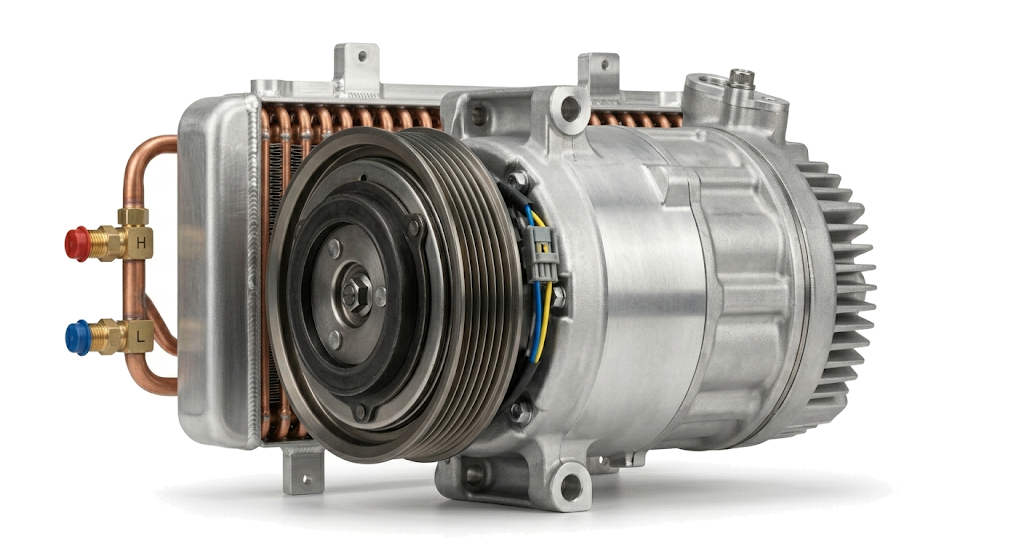
AC Compressor: Overview
The compressor is the power unit of the air conditioning system. It acts as a pump that pressurizes the refrigerant gas and circulates it through the entire AC loop, enabling heat exchange.
Genuine OEM & Quality Aftermarket
RCS stocks this part from established OEM and aftermarket manufacturers. Send your vehicle model, year and variant on WhatsApp to confirm the right fit.
How the AC Compressor Works
Driven by the engine accessory belt, the compressor draws in low-pressure, cool gaseous refrigerant from the evaporator. It compresses it into a high-pressure, hot gas and pumps it toward the condenser.
Within the refrigeration cycle, this part regulates or handles thermodynamics, transitioning the refrigerant pressure and temperature to create the heat absorption or dissipation effect needed for cabin comfort.
Signs of a Failing AC Compressor
When this part starts to wear out or fail, you will typically observe one or more of the following warning signs:
- Warm air blowing from the cabin vents
- Loud clanking, squealing, or clicking noises when the AC is turned on
- The AC compressor clutch refusing to engage or spin
- Refrigerant or oil leaks around the compressor body or shaft seal
AC Compressor Maintenance Tips
Extend the lifespan of this component and avoid expensive repairs by following these best practices:
- 1
Run the AC for at least 10 minutes once a week (even in winter) to circulate oil and keep the rubber seals lubricated.
- 2
Always ensure the drive belt has the correct tension and is free of cracks.
- 3
If the compressor fails, always flush the system and replace the condenser and receiver drier to prevent metal debris from ruining the new compressor.